
What is a Dental Implant?
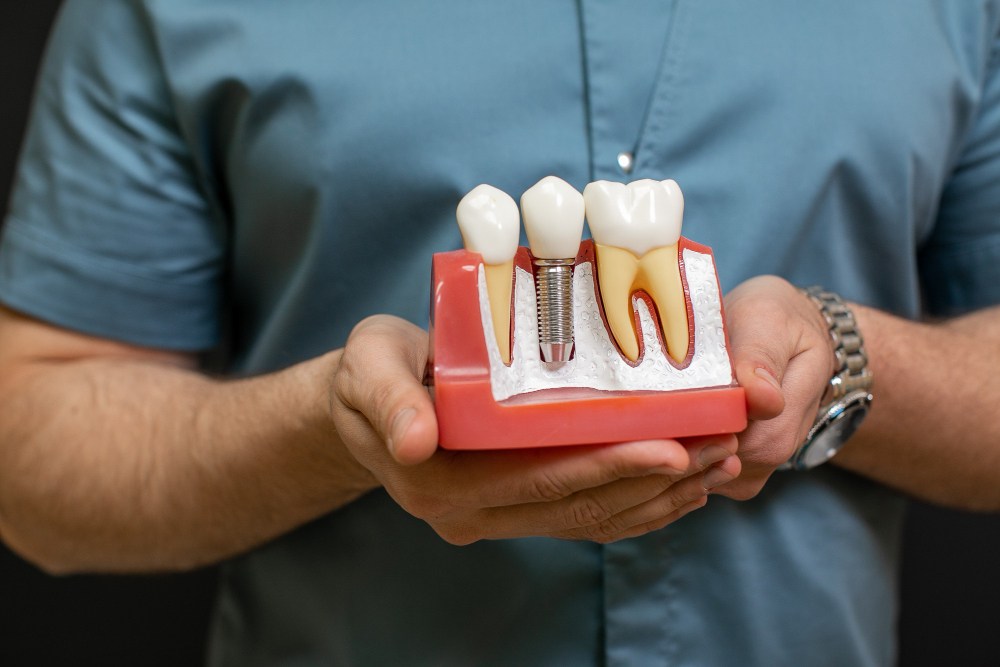
A dental implant is a small metal post that replaces a missing tooth root. Dentists place it into your jawbone during dental surgery. Over time, the implant bonds with the bone. After healing, a dentist attaches a crown, which looks like a real tooth. Because it acts like a natural root, a dental implant helps support your oral health. Many people choose dental implants for tooth replacement because they are strong and long-lasting.
How Does a Dental Implant Work?
First, the dentist places the dental implant into your jawbone. Next, your bone grows around the implant. This process is called osseointegration. As a result, the implant becomes stable. After healing, the dentist adds a connector, called an abutment. Then, a custom-made crown is attached. This crown matches your other teeth. Therefore, your new tooth looks and feels natural. In most cases, dental implants work well for single or multiple tooth replacements.
Benefits of Dental Implants
Dental implants offer many advantages over other tooth replacement options. For example, they:
Because of these benefits, many people prefer dental implants for long-term oral health.
Who Can Get a Dental Implant?
Most healthy adults can get a dental implant. However, you need enough bone in your jaw to support the implant. In addition, your gums must be healthy. People who smoke or have certain health problems may need extra care. For example, diabetes or heart disease can affect healing. Therefore, your dentist will check your health before recommending a dental implant. Children usually wait until their jaw stops growing.
Risks and Considerations
Although dental implants are safe, there are some risks. For instance, infection can happen after dental surgery. Sometimes, the implant does not bond with the bone. In rare cases, nerves or nearby teeth can be damaged. However, most problems are minor and can be treated. To lower risks, always choose a qualified dentist. The American Dental Association and CDC recommend good oral hygiene to prevent infection.
What to Expect During the Procedure
First, your dentist will check your mouth and take X-rays. Next, you will get local anesthesia to numb the area. Then, the dentist places the implant into your jawbone. After this, you will wait a few months for healing. Once healed, the dentist adds the abutment and crown. The whole process may take several visits. However, each step is important for a strong, lasting result.
Aftercare and Recovery Tips
Proper care helps your dental implant last longer. Here are some tips:
With good care, dental implants can last many years and improve your oral health.
In summary, dental implants are a safe and effective way to replace missing teeth. They look and feel natural, and they help protect your jawbone. If you are thinking about tooth replacement, consult a qualified dentist at leela superspeciality dental hospital to find out if a dental implant is right for you.